
Article
India is one of the countries where plant-based food is not just a modern trend, but a deeply rooted part of culture. Vegetables, legumes, rice, spices, herbs, nuts, and seeds have been the basis of the everyday diet here for centuries. Indian cuisine was shaped by the climate, religious traditions, local agriculture, and ancient ideas about balance in nutrition. That is why it is so diverse: in different regions, the same dish can have dozens of variations, and its flavor depends on the combination of spices, the cooking method, and local ingredients.
You can taste plant-based dishes inspired by world cuisines at the Organica restaurant. We combine natural ingredients, signature sauces, and a careful approach to taste so that plant-based food is not a compromise, but a full gastronomic experience.
Feedback from our visitor, originally from India:
Plant-based eating has a long history in India. In many families, meat-free dishes were common long before the modern word "veganism" appeared. Not all Indian dishes are vegan, as ghee, yogurt, paneer, or milk are often used in the cuisine. However, a large part of traditional recipes can easily be adapted to a fully plant-based format.
Many dishes are based on lentils, chickpeas, beans, rice, vegetables, coconut milk, tomatoes, herbs, and spices. Because of this, Indian cuisine is well suited for those who want to eat in a varied, hearty, and satisfying way without animal-based products. Its distinctive feature lies not only in the ingredients, but also in the way of thinking: flavor is created not by the heaviness of a dish, but by the balance of spice, acidity, subtle sweetness, heat, and texture.
It is impossible to imagine Indian cuisine without spices. Turmeric, cumin, coriander, cardamom, ginger, mustard seeds, asafoetida, chili pepper, fenugreek, and garam masala create depth of flavor even in the simplest dish. Spices are often added at the beginning of cooking and heated in oil or together with vegetables so that their aroma opens more fully.
It is the spices that make plant-based dishes expressive. Lentils can be delicate or spicy, rice can be aromatic, vegetables can be caramelized, and a sauce can be warm, rich, and layered. For vegan cuisine, this is especially important because spices help create a complete flavor profile without cheese, cream, or meat.
One of the most famous plant-based foundations of Indian cuisine is legumes. Lentils, chickpeas, beans, and peas often become the basis of hearty dishes with spicy sauces, tomatoes, ginger, garlic, and warming spices. That is why dal, chickpea curry, vegetable stews, and rice dishes have such a deep flavor even without meat or dairy products.
Vegetable curries hold a special place. They can include chickpeas in tomato sauce, potatoes with cauliflower, eggplants with spices, spinach, pumpkin, or sweet potato in a coconut base. In such dishes, complexity is not the main point; harmony is. A soft texture, rich sauce, balanced piquancy, and the aroma of spices all matter. Turmeric, coriander, cumin, garam masala, and other spices create the recognizable taste of Indian cuisine.
Rice is also an important part of the Indian gastronomic tradition. It is served with curry, dal, vegetable dishes, and sauces, often complemented with spices. For example, the Panch Phoron blend combines five spices and gives rice a distinct aroma. In modern plant-based Asian cuisine, this theme is also continued through dishes with rice noodles and spicy broths: they are lighter than thick curries, but preserve a rich flavor thanks to spices, a coconut base, herbs, and fresh accents such as lime. Together with warm naan bread, herbs, plant-based sauces, or curry, such dishes create a complete, nourishing, and flavor-rich lunch.
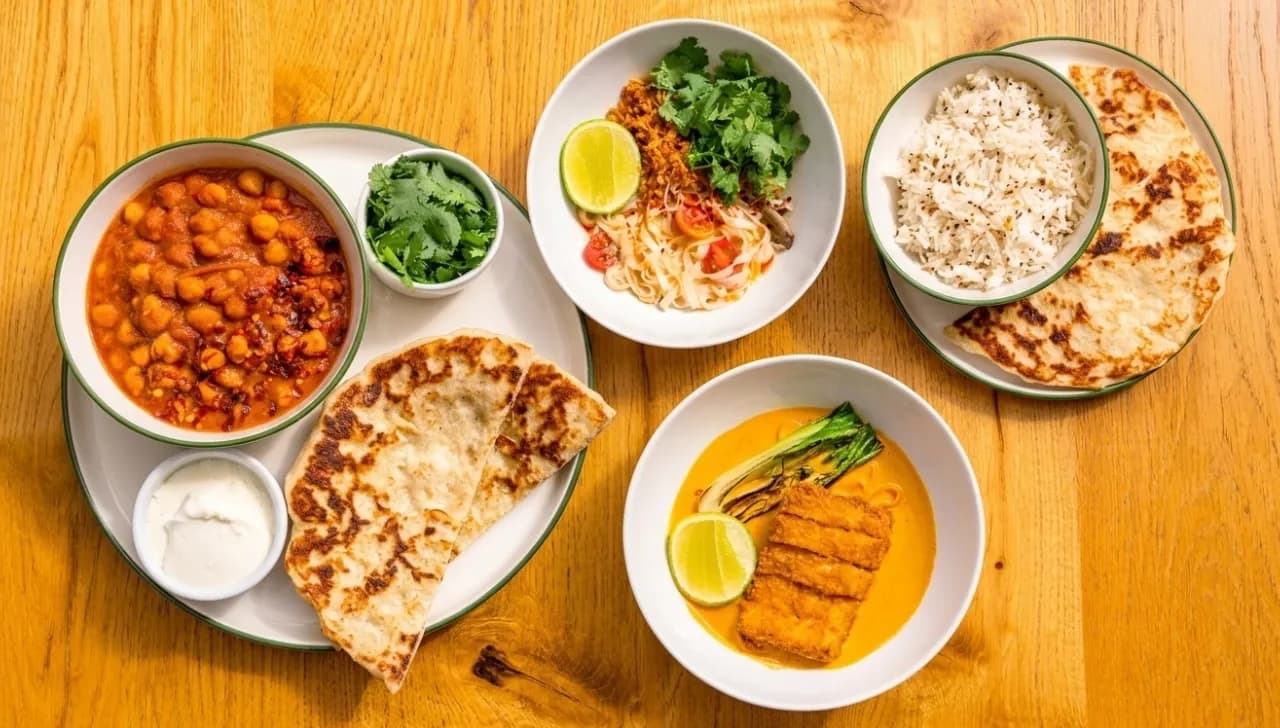
In its dishes, Organica restaurant combines motifs of Indian and broader Asian plant-based cuisine. The foundation includes chickpeas, basmati rice, rice noodles, tofu, mushrooms, coconut milk, herbs, and warming spices. Some items directly refer to the Indian tradition, such as Chana Masala and Panch Phoron rice, while others reveal a related Asian theme through curry broth, Tom Kha, a coconut base, lime, and spicy accents. All these dishes are united by their plant-based composition, rich aroma, and balance of softness, piquancy, and freshness.
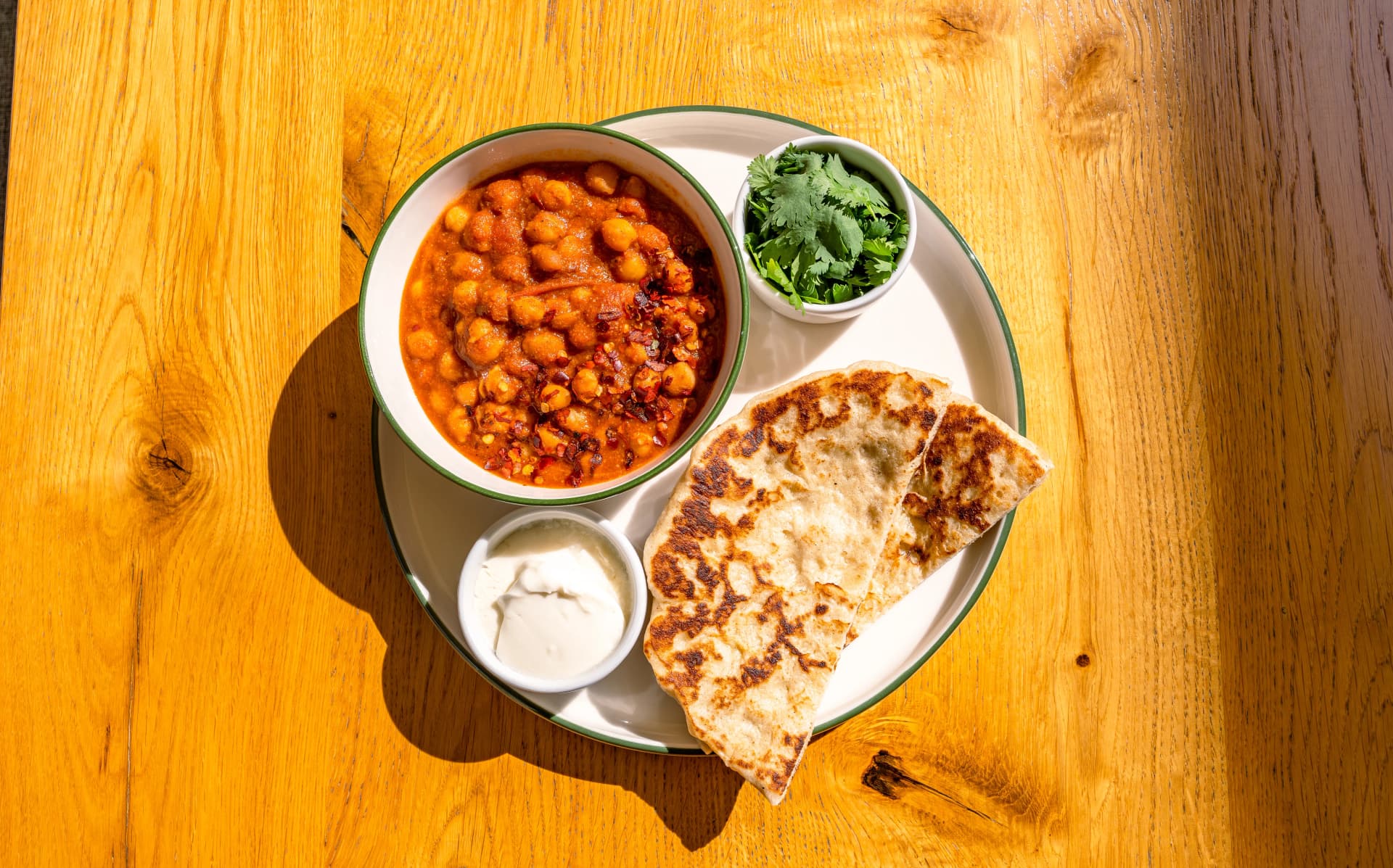
Aromatic Indian dish made with tender boiled chickpeas stewed in a rich tomato sauce with ginger, garlic, and traditional curry spices. The combination of turmeric, coriander, cumin, and garam masala creates a deep spicy flavor with gentle piquancy. We serve it with warm traditional naan bread, coconut labneh, and cilantro. We recommend pairing this dish with rice flavored with Panch Phoron spices.
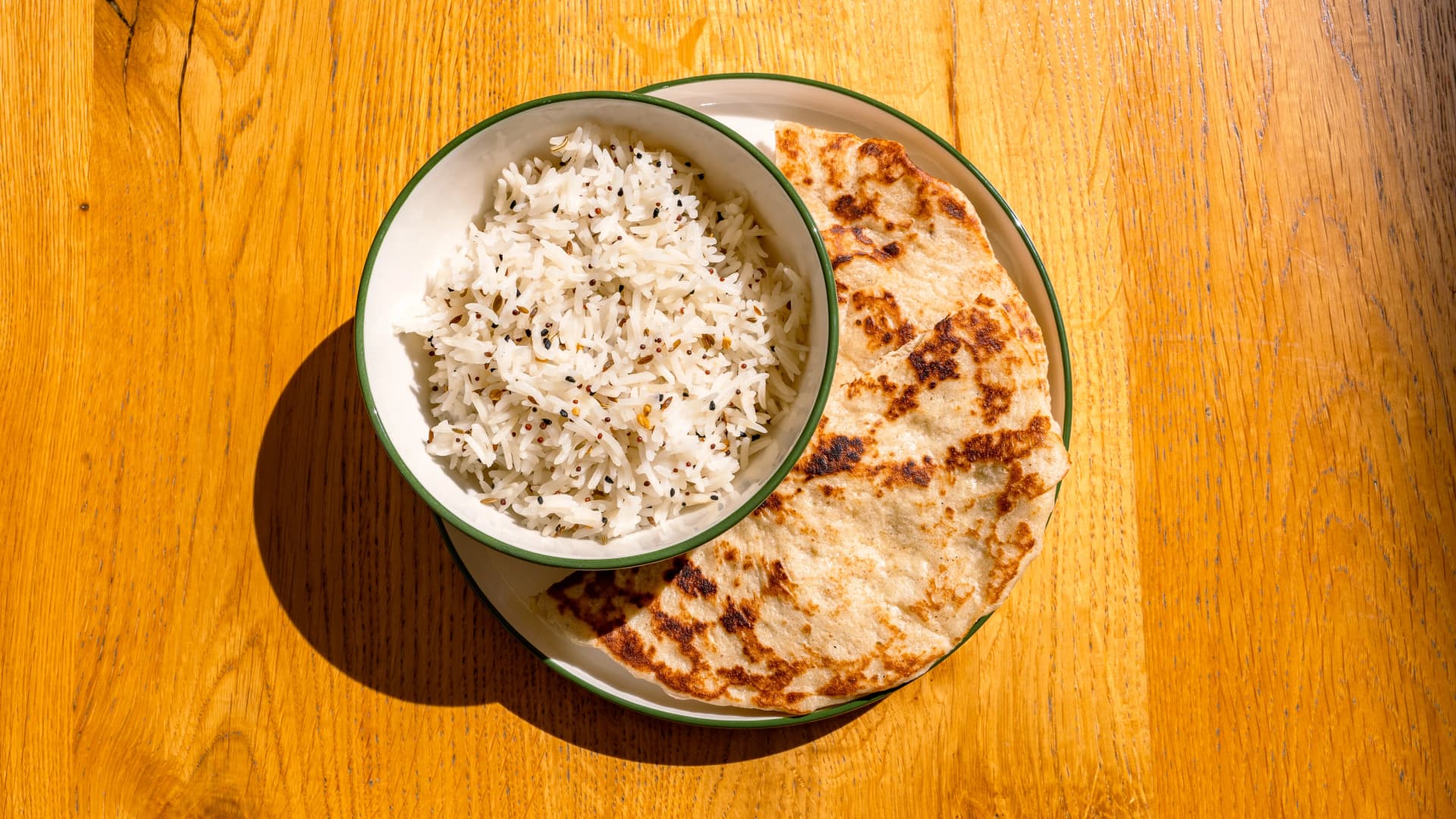
Tender basmati rice flavored with the classic five-spice Panch Phoron blend. The harmonious combination of spicy aromas and a mild taste makes this dish an ideal accompaniment to Indian curries. We serve it with warm traditional naan bread. If desired, the rice can be complemented with Chana Masala — chickpea curry.
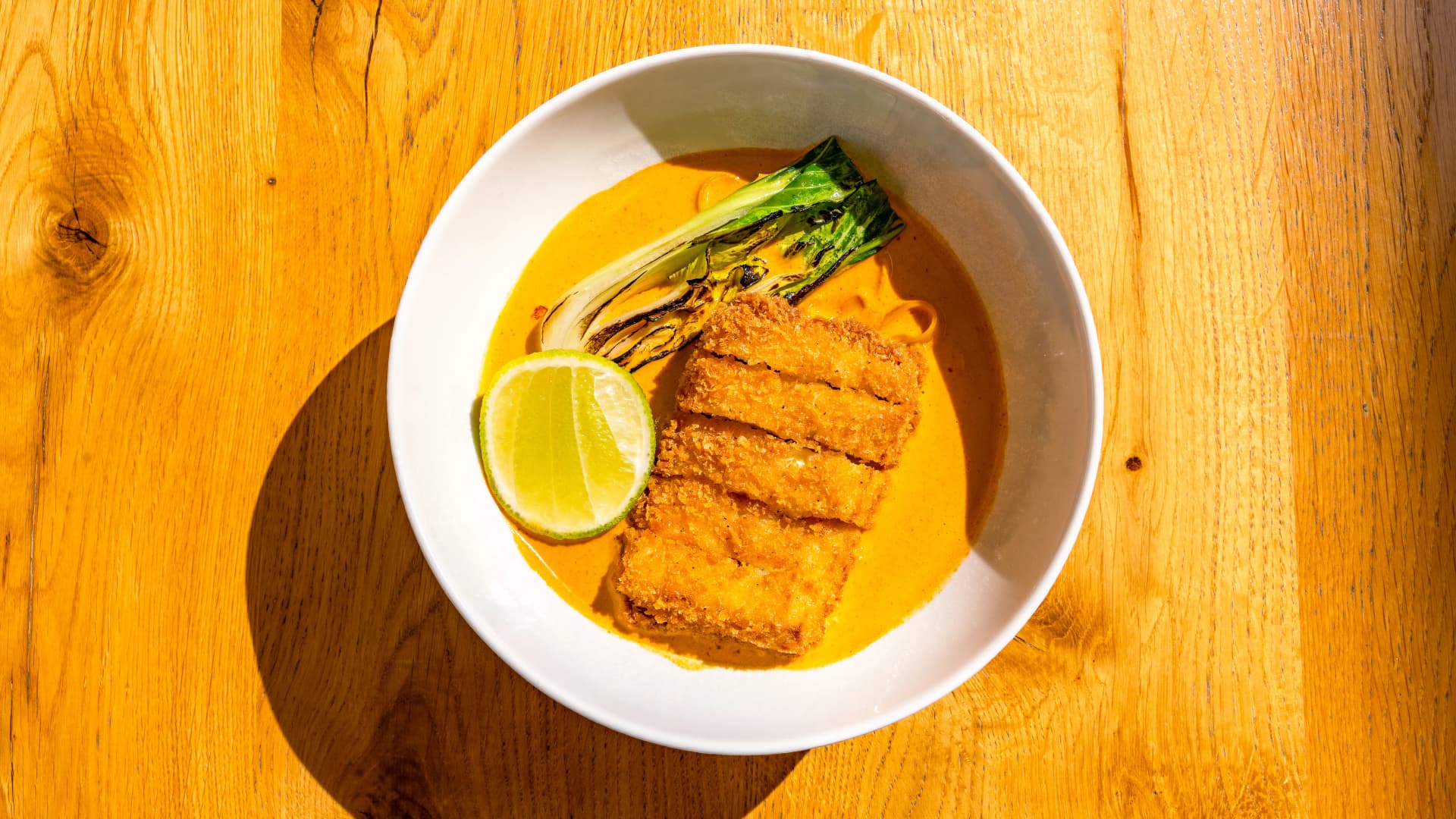
A light curry broth based on coconut milk with a rich spicy flavor. The combination of tender rice noodles, tofu katsu fried until golden, fresh bok choy, and aromatic lime creates a harmonious dish with bright Eastern notes. It is a good choice for those who enjoy light but expressive and piquant plant-based dishes.
The key feature is working with legumes. Lentils, chickpeas, beans, and peas give dishes thickness, nourishment, and a pleasant texture. Another bright accent is the attention to sauces. In India, sauce is not just an addition, but the foundation of flavor: it brings together vegetables, rice, spices, and herbs. An important nuance is contrast. A warm dish may be complemented with fresh chutney, the acidity of lime, a crunchy element, or herbs.
That is why Indian cuisine inspires modern healthy food restaurants so well. It shows that plant-based food can be warm, deep, aromatic, and very satisfying. There is no need to imitate meat or search for complicated substitutes; it is enough to combine vegetables, legumes, grains, sauces, and spices correctly.
Modern vegan cuisine often takes inspiration from different cultures. India gave it a love of spices and legumes, the Middle East gave it hummus, tahini, and falafel, Asia gave it tofu, fermented products, and bright sauces, while Europe contributed serving techniques, seasonality, and work with local vegetables. From this combination, signature cuisine is born: familiar in its ingredients, but new in the experience it creates.
For Organica restaurant, it is important to show that plant-based food can be a complete dish for breakfast, lunch, dinner, or a festive table. That is why the menu combines broths, rice noodles, cream soups, rolls, toasts, bowls, tofu dishes, grilled vegetables, signature sauces, and desserts without unnecessary heaviness.
Vegan dishes of India are an example of how tradition can be modern. They prove that plant-based cuisine can be bright, rich, warm, and diverse. There is room in it for simple products, complex aromas, family recipes, street food, and restaurant-style presentation.
You can experience how diverse plant-based cuisine can be at Organica restaurant. Choose a dish to match your mood, discover new flavor combinations, and spend the day with benefit and pleasure.